Not a Bot.
A Digital
Employee.
We build AI agents that reason across tasks, remember context, use tools, and execute complex workflows — autonomously, around the clock. Powered by GPT-4o, Claude, and Gemini.
Six Agents.
Every Business
Problem.
Not generic chatbots — purpose-built agents that understand your business, connect to your systems, and handle real workloads without supervision. Each agent is custom-trained on your data and workflows.
Customer Support Agent
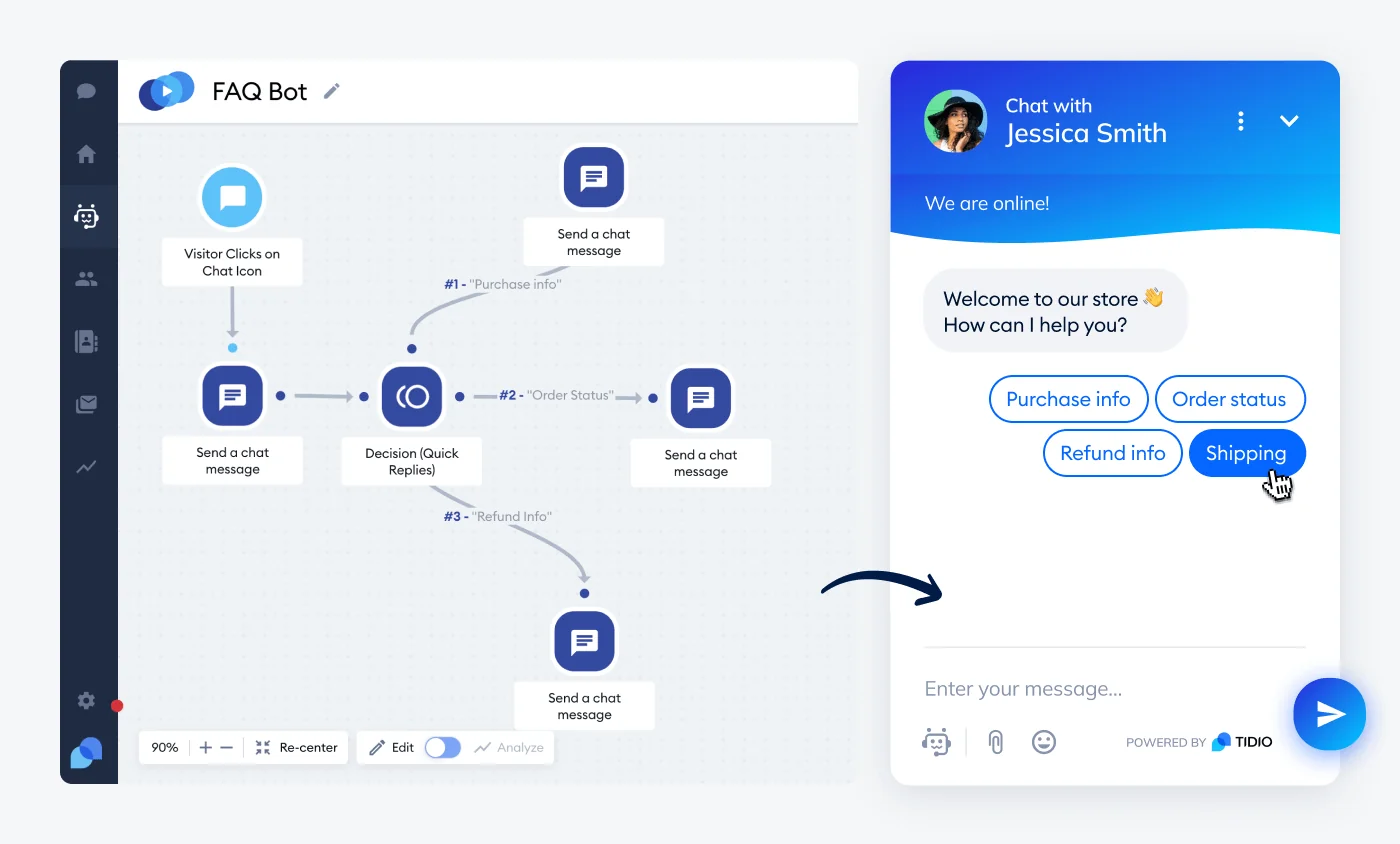
Resolves tickets, tracks orders, handles refunds, and escalates edge cases — all without a human in the loop. Integrates with Zendesk, Intercom, Shopify, and your custom backend.
Sales Outreach Agent
Researches prospects, personalizes outreach, follows up intelligently, and books meetings. Connects to your CRM and sends emails on behalf of your sales team.
Research & Analysis Agent
Browses the web, reads documents, cross-references sources, and produces structured reports. Replaces hours of analyst work with instant, cited research outputs.
Operations Agent
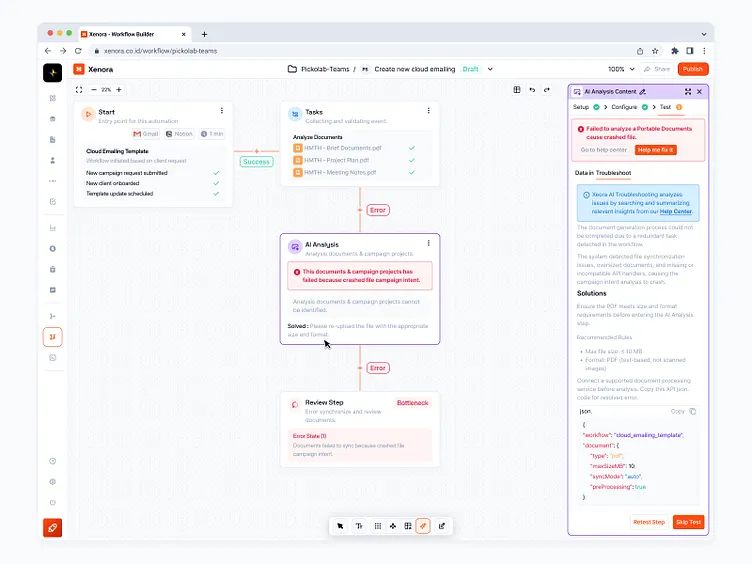
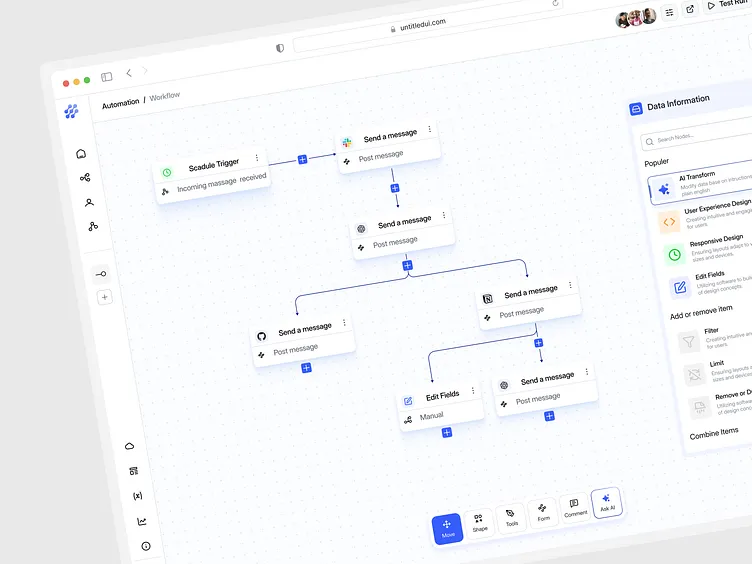
Monitors systems, triggers actions, routes tasks, and coordinates across tools — Slack, Notion, Jira, and APIs. Your ops team handles strategy, the agent handles execution.
Data & Reporting Agent
Pulls data from multiple sources, identifies anomalies, writes natural-language summaries, and delivers reports on schedule. No SQL skills required from the recipient.
Custom Workflow Agent
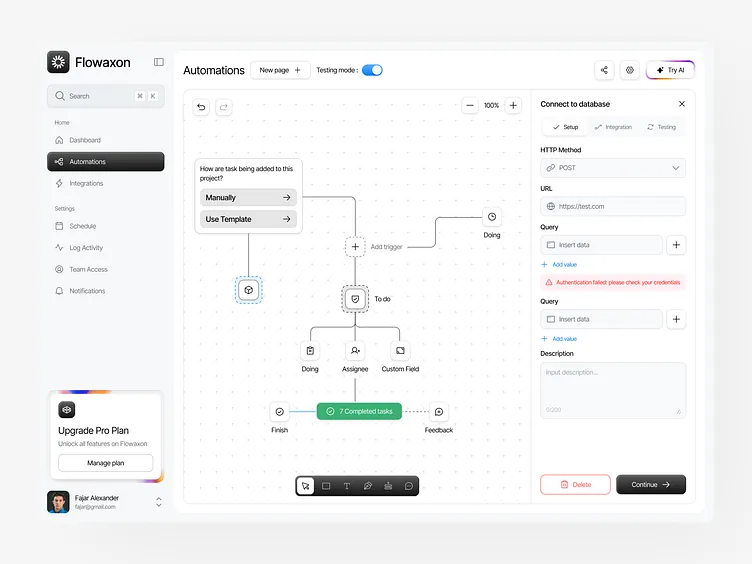
Have a workflow no off-the-shelf tool can handle? We design agents from scratch — custom memory architecture, bespoke tool integrations, multi-agent coordination built to your exact spec.
How Our Agents
Think & Act.
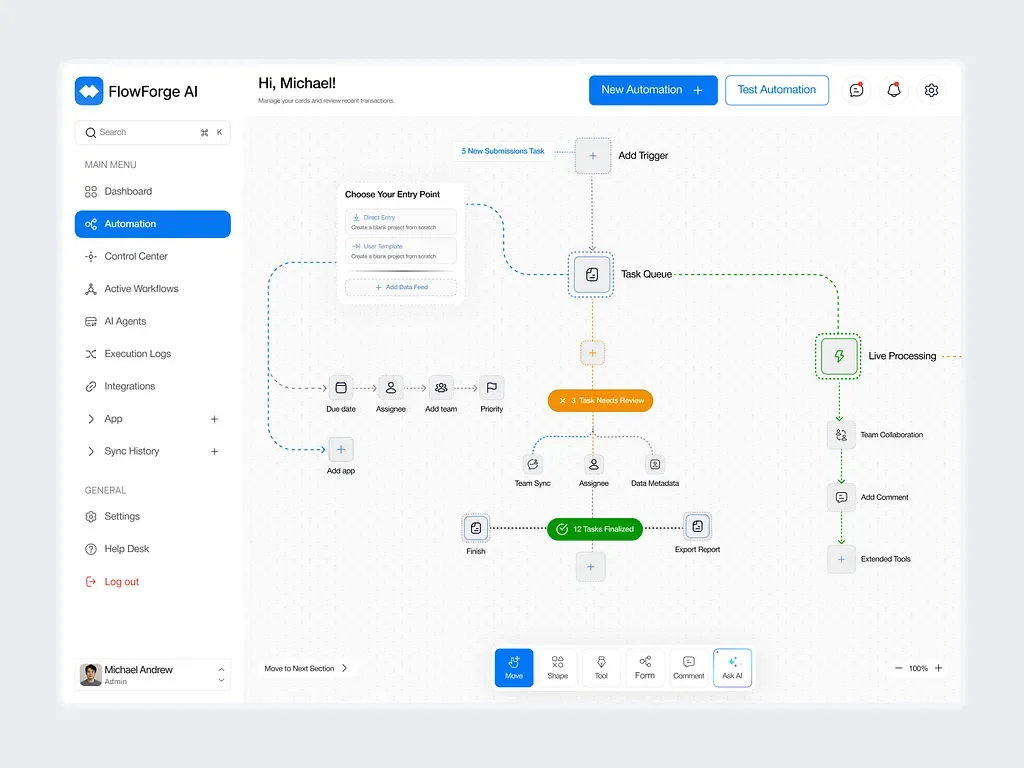
Every DartSyn agent runs on a reasoning loop — not a decision tree. It perceives input, thinks, makes a plan, uses tools, and learns from outcomes. Here's what happens inside every call.
Perceive
Reads user input, APIs, databases, documents — anything in its context window or tool reach
Think
LLM reasons over the problem — chain-of-thought, self-reflection, and uncertainty flagging
Plan
Breaks the goal into sub-tasks, selects tools, decides order of operations and fallbacks
Act
Calls APIs, writes to databases, sends emails, runs code, updates CRMs — real actions
Learn
Stores outcomes in memory, updates context for future runs, improves accuracy over time
Before Agent.
After Agent.
From 8hr ticket queues to 4-second resolutions
An e-commerce brand handling 2,000+ daily support tickets deployed a DartSyn agent connected to their Shopify store, shipping APIs, and Zendesk. The agent handles returns, order tracking, account queries, and FAQ — escalating only genuine edge cases.
Sales team tripled pipeline without hiring anyone
A B2B SaaS company integrated a sales agent that researches LinkedIn profiles, drafts personalized cold emails, tracks opens and replies, auto-follows up, and books demo slots directly into Calendly — all on autopilot.
8 hours of analyst research done in 4 minutes
A consulting firm deployed a research agent that reads industry reports, scrapes competitor websites, cross-references data sources, and produces structured briefings with citations — on demand, for any topic.
AI Agents That
Move the
Numbers.
These aren't projected ROI figures from a sales deck. Every number here comes from real agent deployments — measured against the manual baseline from the same team, the same quarter.
Average task throughput increase vs. a human team handling the same workload manually.
Agents don't sleep, take sick days, or need onboarding. They run continuously without degradation.
Average operational cost reduction vs. the equivalent human team performing the same tasks.
From kickoff to live agent in your production environment — typically 10–14 working days.
Best-in-Class
Infrastructure.
We don't lock you into one LLM or one framework. We pick the right model for your workload — and build on proven orchestration layers so your agents are maintainable, observable, and upgradeable.
GPT-4o
Complex reasoning, vision, tool use & code generation
by OpenAIClaude 3.5 / 4
Long context, nuanced writing, safety & enterprise use
by AnthropicGemini 1.5
Multimodal, 1M token context, Google ecosystem integration
by GoogleReal Questions.
Direct Answers.
The questions every client asks before they commit. Answered straight, no jargon.
A chatbot follows a script — it responds to keywords with pre-written answers. A simple automation runs a fixed if-this-then-that workflow. An AI agent reasons: it reads context, decides what to do, chooses which tools to use, handles unexpected inputs, recovers from errors, and learns from each run. It's the difference between a phone menu and a smart employee.
Anything with an API — which is most modern software. We routinely integrate with Shopify, Salesforce, HubSpot, Zendesk, Stripe, Notion, Slack, Gmail, Google Sheets, Jira, PostgreSQL, MongoDB, and custom internal APIs. If your system has an API endpoint, the agent can use it. We'll scope integrations during the discovery call.
Every agent we build has a confidence threshold and a human escalation gate. Actions above a certain risk level (like issuing refunds over $500, or sending emails to >50 recipients) require human approval before executing. We also build comprehensive audit logging so every decision is traceable. The agent handles the 90% — your team handles the exceptions.
We build with API access to OpenAI, Anthropic, and Google — not the consumer products. Enterprise API agreements explicitly prohibit training on your data. For highly sensitive workloads, we can deploy on self-hosted or on-premise models (Llama 3, Mistral) where data never leaves your infrastructure. We'll advise the right architecture for your compliance requirements.
A focused single-task agent (like a support ticket resolver or a report generator) typically goes live in 10–14 working days. Multi-agent systems handling complex workflows take 3–6 weeks. We build in stages: a live MVP first, then expand capabilities based on real usage data. You see the agent working before we've finished building it.
All agents come with a 30-day post-launch monitoring period where we watch performance metrics and fix issues at no extra cost. After that, we offer a monthly retainer for model updates (as new LLM versions release), new integration adds, and performance tuning. Most clients see continued improvement over the first 90 days as the agent's memory fills with real operational data.
Let's Build Your
First AI
Agent.
Tell us one process your team does repeatedly. We'll map exactly how an agent would handle it — free, in 48 hours, with a technical spec you can act on immediately.